
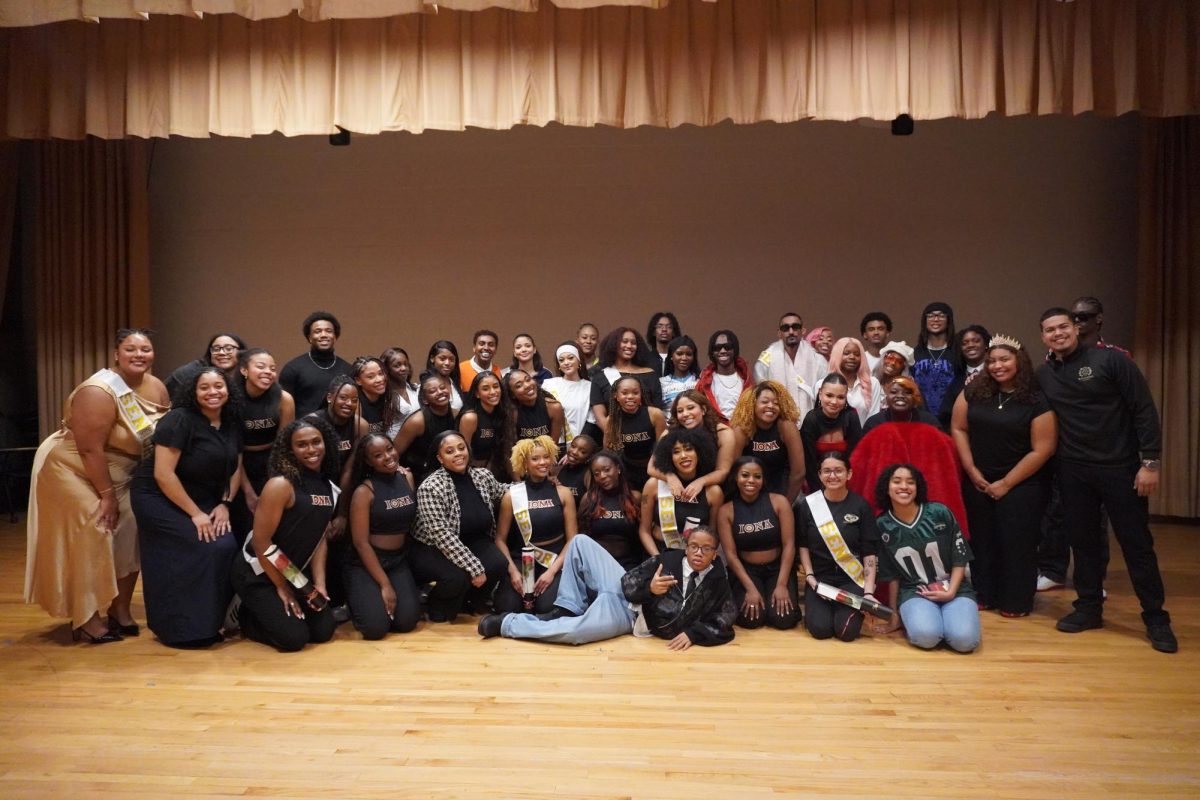
On Feb. 20 and Feb. 21, 2026, Iona’s Black Student Union held their annual Culture Show in the Murphy Auditorium.
This year’s show, which celebrated the 100-year anniversary of the creation of Black History Month, showcased slam poetry, a fashion set and performances by both musicians and dancers.
One of these performances was a Salsa dance. While not associated with the stereotypical idea of “blackness”, Salsa has Afro-Carribean roots. Its inclusion was something that BSU President Brianna Vega said was intentional and a way to showcase the way the diaspora is connected.
“Black culture is not limited to one region, and Salsa music and dance are deeply rooted in African rhythms, movement and history that traveled through the Caribbean and Latin America,” said Vega. “Including it was a way to honor that shared lineage and show how Black influence extends across cultures.”
While being organized by the Black Student Union, they weren’t the only club involved. The Gold Line and Stage 4 Step teams, in addition to Iona Fashion Club, had both supported the show and had their own segments within the show. A throughline between all these groups, as Vega pointed out, is the influence Black culture has had on all three mediums.
“Bringing in groups like the Gold Line team, Stage 4 Step Team, and Iona Fashion Club allowed us to highlight different expressions of culture, through dance, stepping and fashion,” Vega stated. “All aft forms that have been known to be an outlet in Black culture. I feel like it’s also a reflection of what our community actually looks like. Black culture heavily influenced these groups and we wanted the show to be a representative of that. Culture isn’t one dimensional, so the production wasn’t either.”
Vega had ended the interview talking about the importance of the show itself. She had brought up how the show created space for representation, education, and public celebration of an ever-changing culture. Vega also stated the impact of the show on a smaller scale.
“Culture show gives students the opportunity to see a piece of themselves on stage, learn something new and feel connected to something bigger than themselves,” Vega stated. “That’s not something you just choose to phase out as new E-boards come and go, it’s something you protect and continue building on every year.”